
Blockchain Edge Data Analytics
Blockchain Edge Data Analytics
David Tepper's $ORCL Exit: Why He's Betting Big on the Forgotten Corner of Finance (and Why You Should Too)
Alright, buckle up, folks! Because legendary investor David Tepper just made a move that's got Wall Street scratching its head, and I think it's a brilliant signal for where the real opportunities are hiding. He dumped his Oracle stake—yes, Oracle (ORCL), the AI-adjacent darling—and went all-in on… regional banks? Now, I know what you're thinking: Banks? Seriously? Isn't that like betting on dial-up internet in 2025? But trust me, this is about more than just balance sheets and interest rates.
Tepper's Appaloosa Management didn't just dabble; they piled into financials. Fiserv, Truist, KeyCorp, Citizens Financial, Comerica, Western Alliance Bancorp, Zions Bancorporation—the whole shebang. While everyone's chasing the next shiny AI unicorn, Tepper's quietly loading up on the infrastructure that will actually fuel the future. Billionaire David Tepper Dumped Appaloosa's Stake in Oracle and Is Piling Into a Sector That Wall Street Thinks Will Outperform
Think about it: AI needs data centers, right? Oracle was riding high on that wave, and rightly so. But those data centers? They need funding. They need loans. They need the entire financial system humming smoothly to make the AI revolution a reality. And who's going to provide that? Not the Magnificent Seven. It's going to be these regional banks, the unsung heroes who understand local markets, build relationships with growing businesses, and grease the wheels of the real economy.
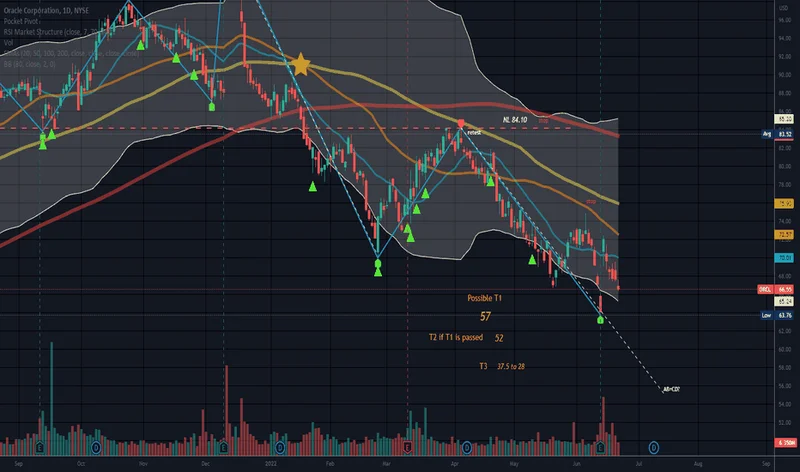
Now, why did Tepper ditch Oracle? Well, the second article notes that Oracle's stock has taken a hit, dropping nearly 10% recently. The reason? A massive $38 billion debt load on top of an already hefty $104 billion. Oracle’s Bold Moves: Stock Dips Amid Debt Concerns That's a lot of pressure, even for a company as innovative as Oracle. The market’s starting to wonder if those ambitious AI infrastructure investments will actually pay off. Will they? That's the billion-dollar question.
Meanwhile, the financial sector has been… well, let’s just say “underappreciated.” As the first article points out, both the big-bank Financial Select Sector SPDR Fund and the regional banking ETF have been trailing the broader market. But Morgan Stanley and SoFi are bullish, and I'm right there with them. Why? Deregulation is on the horizon. The Fed might ease up on capital requirements, which means banks can lend more, boost returns, and actually start growing again. This could be a game-changer, a real paradigm shift.
The rise of private credit? That was partly because banks were so restricted after the Great Recession. Looser regulations could unleash a wave of new lending, fueling innovation and growth across the board. And while some worry about credit quality, the data simply doesn't show a significant deterioration. This isn't 2008 all over again.
Plus, let's be honest, regional banks are ripe for acquisition. As the article mentions, Comerica was already snapped up in October. Tepper might be playing chess while everyone else is playing checkers, positioning himself for some juicy premiums as the banking sector consolidates.
This reminds me of the early days of the internet. Everyone was focused on the flashy websites and the dot-com boom, but the real money was in the companies building the fiber optic cables and the network infrastructure. Tepper is doing the same thing here. He's betting on the picks and shovels of the AI revolution.
I think it's a wake-up call. It's a reminder that the most exciting opportunities often lie where nobody else is looking. It's easy to get caught up in the hype around AI, but the smart money is always one step ahead, anticipating the second-order effects. And the second-order effect of AI is a massive demand for funding, for infrastructure, for the kind of stable, reliable financial system that regional banks provide.
Now, I know that some people are still skeptical. I saw one comment online that said, "Banks are boring! Where's the innovation?" But that's exactly the point. Innovation isn't just about flashy new technology; it's about finding new ways to use existing tools to solve real-world problems. And right now, the biggest problem facing the AI revolution is scaling up, and that requires a strong, stable financial system.
What this means for us is a chance to re-evaluate our portfolios, to look beyond the headlines, and to consider the unsung heroes of the future economy. What could it mean for you? The possibility to get in on the ground floor of a trend that everyone else is missing. To invest in the companies that will actually power the AI revolution, not just the ones that are talking about it.
One thing we must consider, though, is the ethical responsibility that comes with this. With increased lending and deregulation, we need to ensure that these banks are acting responsibly, that they're not repeating the mistakes of the past. It's up to us, as investors and as citizens, to hold them accountable. When I first considered all of this, I honestly just sat back in my chair, speechless. It reminds me why I got into this field in the first place.